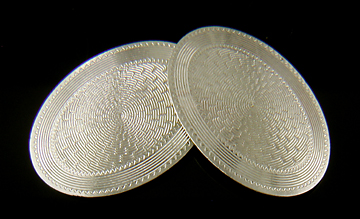
Saturday, May 17, 2008

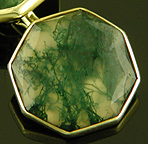
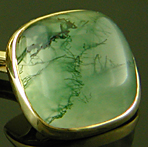
Carter, Howe Moss Agate Cufflinks, circa 1900.

Moss Agate

Diamonds are dandy and Sapphires swell, but when it comes to antique cufflinks Moss Agates have an inescapable charm. A beautiful variety of quartz, fine Moss Agate has the appearance of a watery forest of seaweed floating in a crystal, clear pool. Like fingerprints, each specimen of Moss Agate is unique. It is little wonder that this intriguing gemstone was a favorite among cufflink and jewelry makers during the early 1900s.


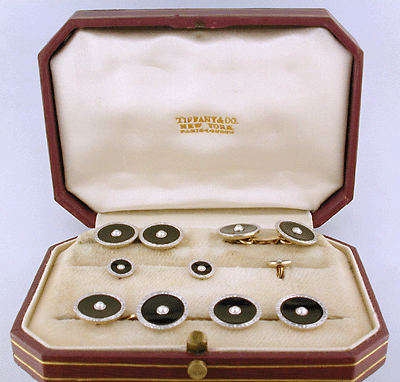
Carter, Howe Cufflinks, circa 1900.

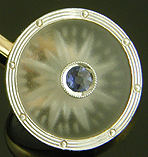
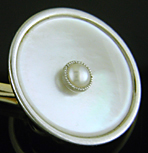
One of the firms that embraced Moss Agate was Carter, Howe & Company. Carter, Howe created beautiful cufflinks and dress sets with Moss Agate set in 14kt gold. The firm often backed the transparent Agates with mother of pearl to highlight the beauty of the green inclusions. Carter, Howe was a predecessor of Carter, Gough & Co. which created beautiful platinum and gold cufflinks during the 1920s.


Carter, Howe Moss Agate Vest Buttons, circa 1900.


Saturday, May 10, 2008

Ziething & Co. Cufflinks

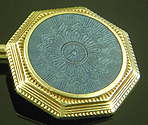
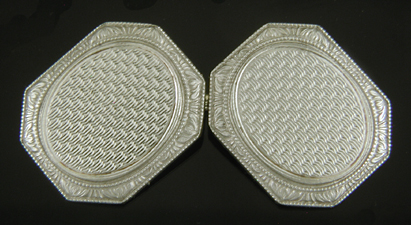
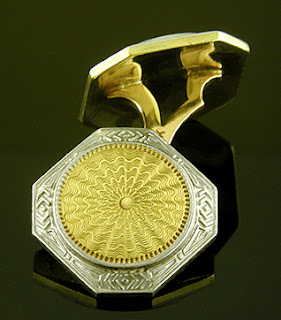
Ziething & Co. Octagonal gold cufflinks, circ 1925.

Ziething & Company is one of the lesser known makers of fine cufflinks from the first half of the last century. The firm created intricately engraved cufflinks with beautifully engine-turned centers surrounded by bold white gold borders. The brightly engraved links literally sparkle and dance on the cuff.


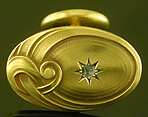
Ziething & Co. Starburst gold cufflink, crca 1925

Ziething & Co. was based in Newark, New Jersey and specialized in manufacturing 10kt and 14kt gold jewelry. Based on the style and construction of the cufflinks, Ziething appears to have created jewelry (or at least cufflinks) during the 1920s and early 1930s. I suspect the firm did not survive the Great Depression, like a number of the cufflink makers from the early 20th century.


The maker's mark for Ziething is a "Z" in a diamond-shape cartouche. The maker's mark is usually found in the middle of the connecting bridge. The other side of the bridge is stamped with the gold karate mark, "10K". The Ziething mark is sometimes misidentified as an elongated "N".


Ziething & Co. "Spider Web" gold cufflinks, circa 1925.

If you would like to view more elegant cufflinks from the past,
please visit our Antique Cufflink Gallery.

Saturday, May 3, 2008

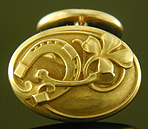
Surand & Co. cufflinks.Durand & Co. platinum and gold cufflinks, circa 1910
Durand was one of the many jewelry makers
based in Newark, New Jersey
.


Three Books and a Museum

As the temperature climbed above 80 degrees last week, my thoughts turned to summer. Two of my favorite summertime activities are reading by the lake and visiting the air conditioned confines of museums. So here is a list of several of my favorite cufflink-related books and one of my favorite museums.


The Glitter & The Gold: Fashioning America's Jewelry by Ulysses Grant Dietz, et al

During the decades from 1850 to 1950, Newark, New Jersey was the center of fine jewelry manufacture in the United States. The majority of the cufflinks featured in the Antique Cufflinks gallery and this blog were designed and manufactured by Newark jewelry makers. In 1997 an exhibition at the Newark Museum explored the history and evolution of the Newark jewelry trade and the stunning jewels created. The Glitter & the Gold documents the exhibition and offers many wonderful pictures and informative essays. If you are interested in American cufflinks and jewelry this book is indispensable.


Cufflinks by Susan Jonas and Marilyn Nissenson

This is a fun book. It tells the story of gorgeous cufflinks and the fabulous people, le beau monde, who wore them. The book presents a sampling of fine links from the early 1700s through 1990 with an emphasis on early 20th century and Art Deco examples. The book is beautifully illustrated with wonderful photographs. This is a great read for an afternoon at the beach.


Cuff Jewelry: A Historical Account for Collectors and Antiques Dealers by Howard L. Bell

While the Jonas book samples the history of fine cufflinks, this book goes into greater depth on a narrower range. Howard Bell illustrates cufflinks from the Victorian era to the 1960s with over 1000 images. He covers diverse topics such as historical periods, materials, methods of manufacture, gemstones and makers' makers. His Chronology of Linkages is particulary interesting. Published in 1994, the book's price estimates provide a useful benchmark for how antique cufflinks have appreciated over the past 15 years. This book is a useful resource for the aspiring cufflink collector.


The Newark Museum Newark, New Jersey

An opportunity to visit The Newark Museum should never be passed up. The museum has a wonderful collection of American jewelry and decorative arts from the 19th and 20th centuries. The Museum's Curator of Decorative Arts, Ulysses Grant Dietz, has organized a number exemplary exhibitions on jewelry and related arts. Mr. Dietz is also the lead author of the first book listed above. You should visit the museum's web site to learn of current exhibitions and special events ( http://www.newarkmuseum.org/ ).


Saturday, April 19, 2008

Art Deco Spirals


Featured this week is a nice example of the radiating spiral motif popular during the 1920s. These cufflinks are crafted with platinum tops and 14kt gold backs. The platinum tops are beautifully engine-turned with swirling radiant spirals. The radiant centers are accented with black enamel and surrounded by flowing leaf-and-vine borders. Crafted in 14kt gold and platinum, circa 1920.


The cufflinks were created by Charles Keller & Company. Founded in 1885, Charles Keller manufactured gold and platinum cufflinks, lockets and other jewels in workshops based in Newark, New Jersey. During the early decades of the last century, the firm specialized in creating elegant cufflinks with intricately engraved platinum or white gold surfaces. Charles Keller remained in business until the early 1930s.


The cross bars are stamped with the precious metal mark for platinum, "PLAT". To the right of the platinum mark is the maker's mark of Charles Keller & Company, an elongated "C" followed by the letter "K". In side the "C" is a karat mark, "14", for the purity of the gold.


Every so often the Charles Keller mark is misidentified as the mark of another fine cufflink maker, Carrington & Company. The Carrington mark also has a "14" surrounded by a "C" . However, in the Carrington mark the "C" is squarish and angular, not elongated and rounded like the Keller mark. As always, care should be taken when reading and interpreting makers' marks.


Here is a second pair of beautifully engraved Charles Keller cufflinks. The platinum tops are engine turned with a stippled pattern of concentric circles. This gives the cufflinks a frosty, shimmering appearance. The stylized flower (or star) motifs were created by leaving areas of the brightly polished platinum unstippled. The border is a classic egg-and-dart pattern recalling the Beaux-Arts style of the late 1800s. Crafted in platinum and 14kt gold, circa 1920.


Saturday, April 12, 2008

Cufflinks ... Chicago Style?

Gold and Platinum Cufflinks by the "L-maker."

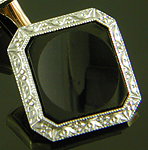
Every so often you will come across an elegant pair of gold and platinum cufflinks marked on the reverse with a small script "L". The cufflinks are usually rectangular in shape with beveled corners, much like an emerald-cut diamond. The tops are embellished with intricately engine-turned centers surrounded by foliate and geometric borders. I have nicknamed the unknown maker of these cufflinks the "L-maker". Here are a few examples.


Beautifully engine-turned 14kt yellow gold cufflinks with intricate acanthus leaf borders. These cufflinks are a nice example of the rich gold work characteristic of gentleman's jewelry in the early decades of the last century. Crafted by the "L-maker", circa 1920.


This pair beautifully displays the cool geometry of Art Deco design. Engraved and dimpled trapezoid borders surround chequered platinum centers. Crafted by the "L-maker" in 14kt gold and platinum, circa 1930.

The reverse of these cufflinks are stamped with precious metal marks and the maker's mark - a small script "L" in a lozenge (diamond shape). Hence the name "L-maker."


The mark is similar to the maker's mark of Lebolt & Co., a retail jeweler founded in Chicago in 1899. Inspired by the fashion for hand crafted silver in the early 1900s, Myer Lebolt, founder of the firm, opened a workshop to create custom silver pieces for his retail stores in Chicago and New York. Eventually the workshop included goldsmiths and platinumsmiths who created jewelry in addition to the firm's sterling flatware and holloware. It is possible these elegant cufflinks were created in the Lebolt workshop during the 1920s.

At this time, an attribution of these cufflinks to Lebolt & Co. is only a working hypothesis. The similarity of the marks is suggestive, but not conclusive. It is wise to confirm the identification of an unknown maker's mark with other sources such as old catalogs, original sales receipts and period advertisements. Family recollections and company names on jewelry boxes can also be helpful, but are sometimes less reliable. The mystery of the "L-maker" may be closer to a solution, but further research remains to be done.

If you would like to read more about Lebolt & Co. and the Chicago silversmiths, there is a wonderful book, Chicago Metalsmiths, by Sharon Darling. Although the book is out of print, it is worth a trip to the library or a secondhand book shop to find a copy.


Saturday, April 5, 2008

Creature Comforts

Unger Bros. Possum Cufflinks, circa 1900.

The jewelry and taste makers of the decades around 1900 (the Late Victorian and Art Nouveau periods) were extremely fond of jewels featuring animals and insects. It is fair to say they were a little critter crazy.

Among cufflinks of this period you find a diverse menagerie of exotic and mythical creatures. From traditional links sporting foxes and hounds to the fantastic hybrid creations of the Art Nouveau jewelers. In between dwell lions, possums, dragons and griffins.


Art Nouveau lion cufflinks by Larter & Sons

Here I feature a wonderful pair of gold cufflinks from about 1900. The cufflinks feature regal lions prowling through a jungle of swirling vines. The cufflinks beautifully illustrate the sinuous, flowing curves and asymmetry of Art Nouveau design. It is reasonable to wonder if a pair of cufflinks like these inspired C.S. Lewis when he wrote The Lion, the Witch and the Wardrobe several decades later. There is something magical about the Art Nouveau designs.

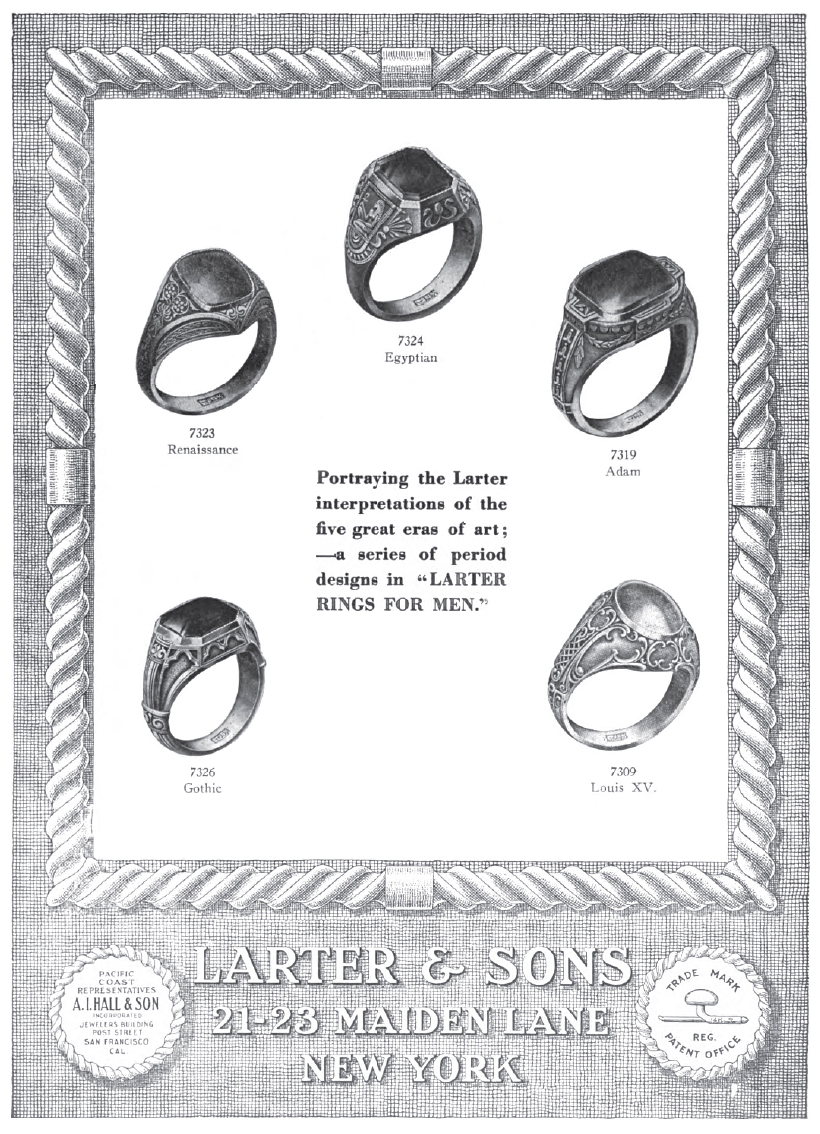
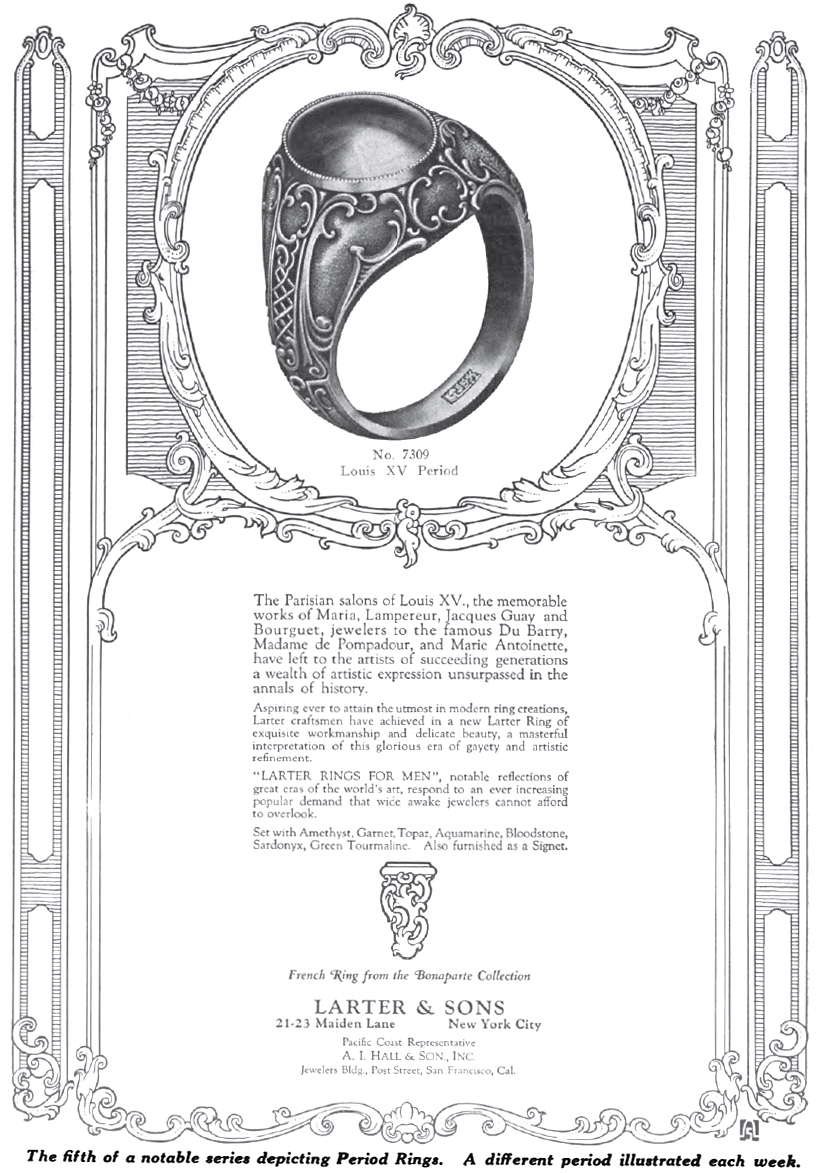
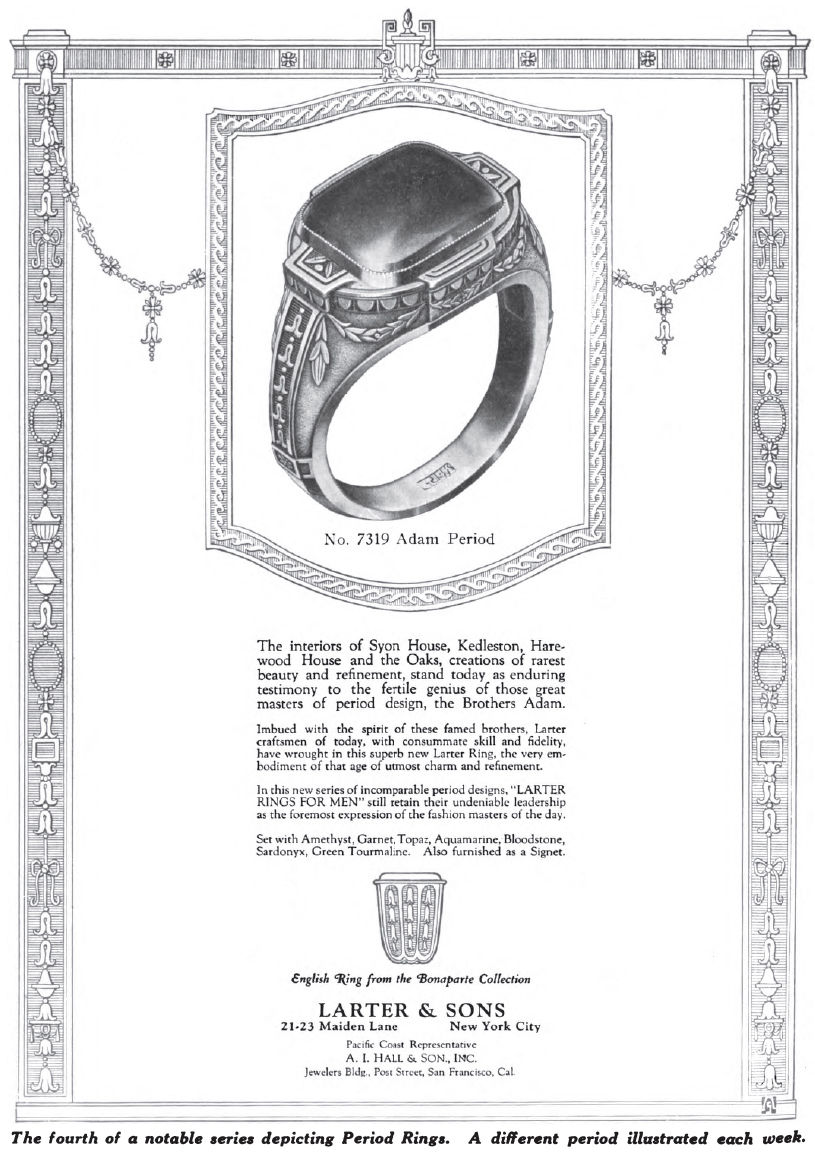
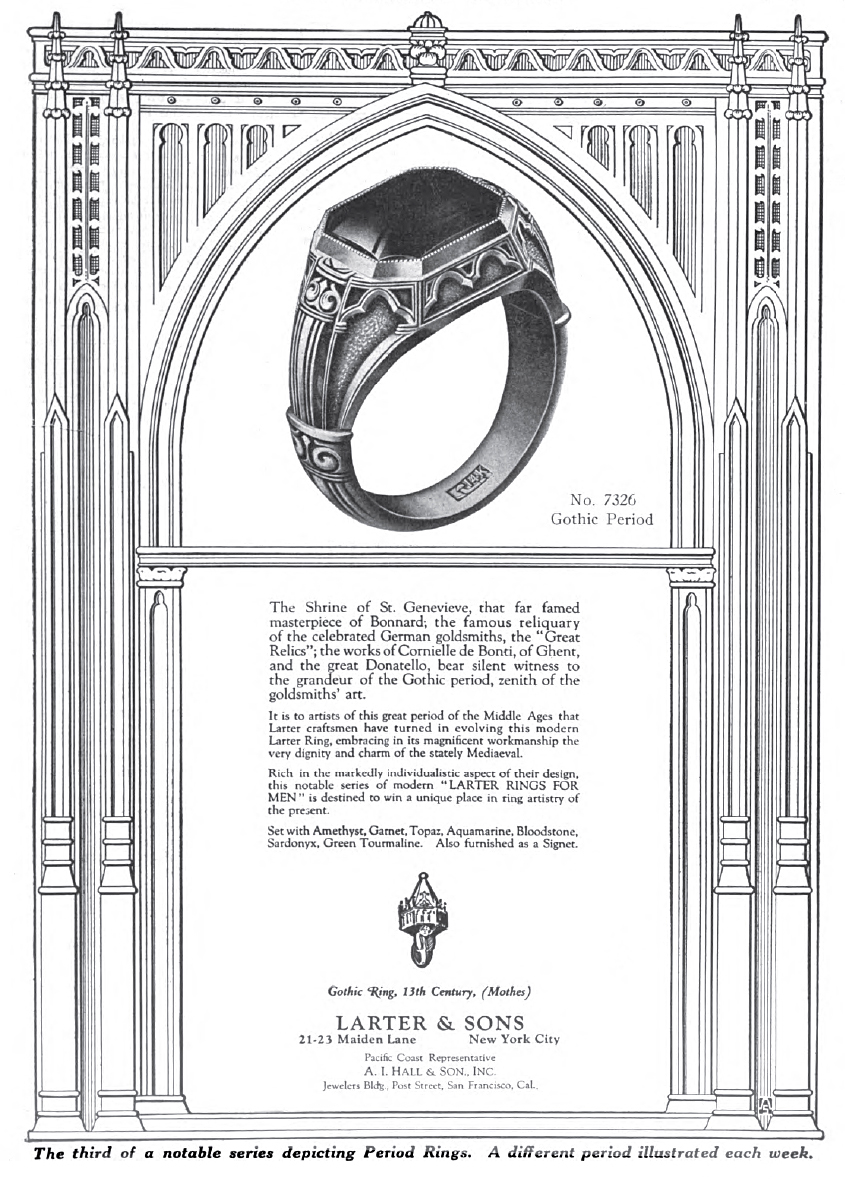
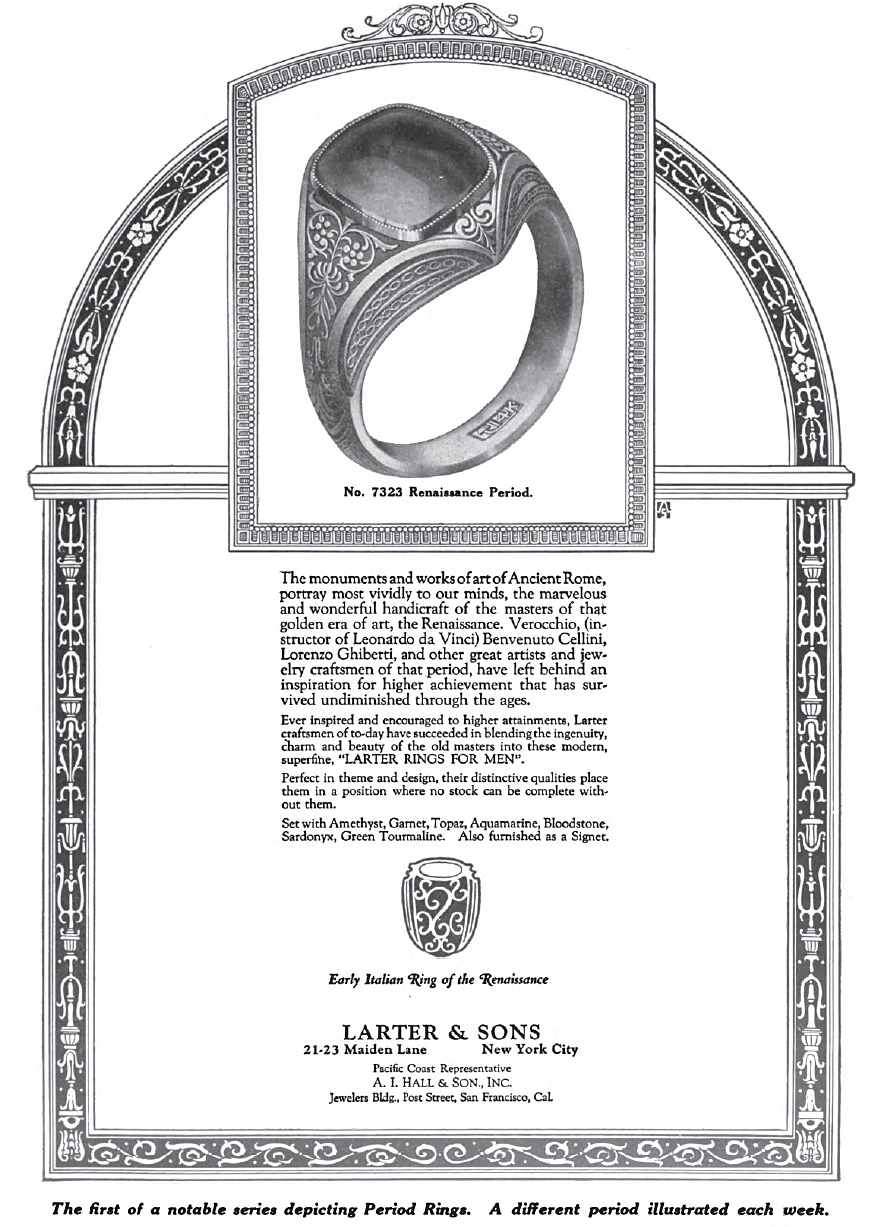
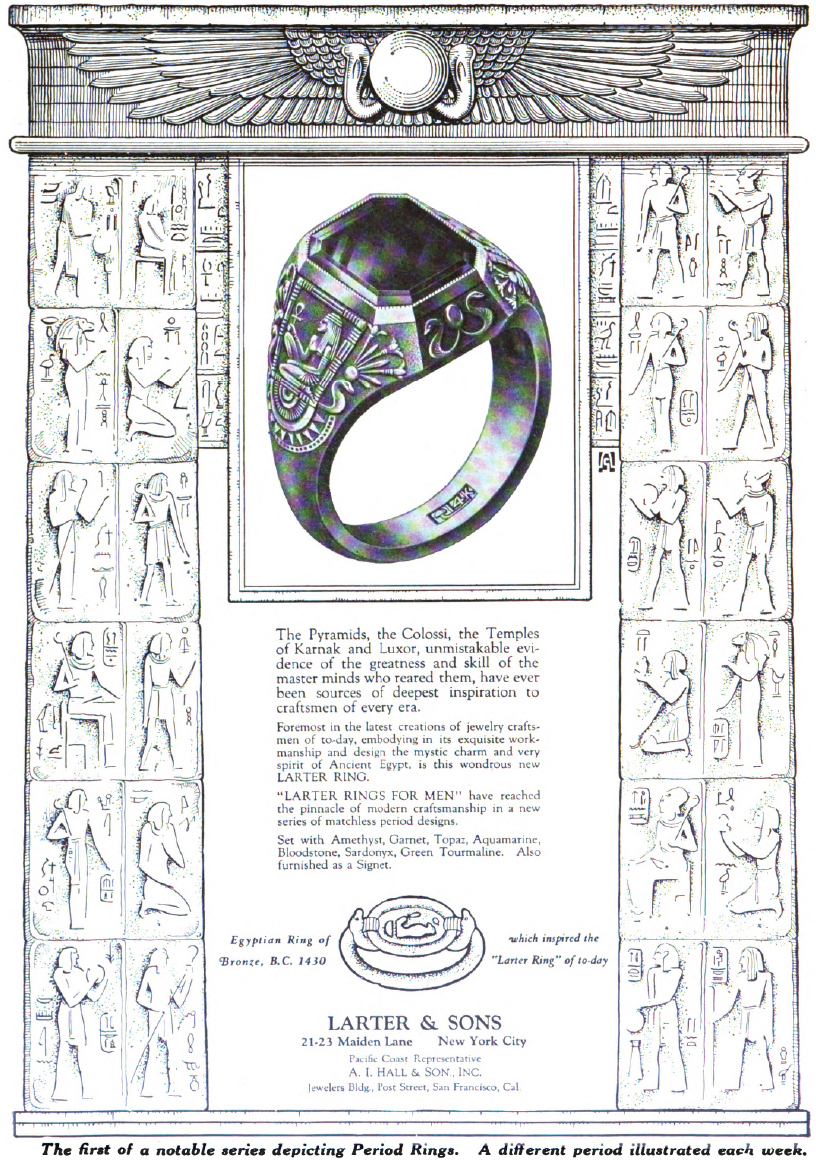
Crafted in 14kt gold, these cufflinks nicely evince the artistry and craftmanship often found in antique cufflinks. The links were created by Larter & Sons, a firm founded in 1865 and still making jewelry today. In several earlier posts I discussed the distinctive gold and enamel cufflinks created by Larter & Sons during the 1920s.


Larter & Sons gold and black enamel cufflinks.

Larter Gold and Enamel Cufflinks, circa 1920


If you enjoy elegant cufflinks from the past,
please visit our Antique Cufflink Gallery.

Saturday, March 29, 2008

Cufflinks - On Your Marks

Carrington & Co. Sapphire and Gold Cufflinks

Carrington & Co. Sapphire and Gold Cufflinks, circa 1930

Antique cufflinks are bright bits of history. They capture the style and elegance of a past time and bring them into the present. By closely examining the design and craftsmanship of a pair of antique cufflinks you can often estimate their age and identify the maker.
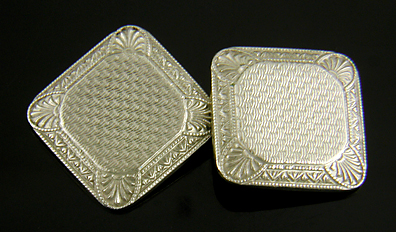
It is worthwhile to examine the backs of the cufflinks as closely as the fronts. On the backs, you will often find a wealth of clues about who, where and when the cufflinks were made. You may even discover who first wore the cufflinks and the special occasion on which they were given. To help you unravel these clues, I illustrate the maker's marks of three prominent American cufflink makers.


Carrington & Company

Founded in 1900 by Charles Carrington, Carrington & Co. created elegant gold and platinum cufflinks and dress sets for five decades. The firm was also renowned for elegant cigarette and vanity cases, lockets and other jewels. Carrington cufflinks and accessories were retailed by many of the finest jewelers of the day including Tiffany & Co and Cartier.


The maker’s mark for Carrington & Company is an angular “C” surrounding a “14” or “18”, the gold purity mark. Platinum cufflinks may be simply marked "PLATINUM".


Carter, Gough & Co.

Originally founded by Aaron Carter in the 1840s, the firm evolved through numerous partnerships and name changes to become Carter, Gough & Co. in 1915. The firm's cufflinks ranged from heavier, gem set jewels during the Victorian era, to intricately engraved gold and platinum links during the 1910s and 20s. Carter, Gough did not survive the economic exigencies of the Great Depression and closed in the early 1930s.


The Carter, Gough maker's mark is an arrowhead surrounding the letter "C". The arrowhead is sometimes misidentified as a spade or carrot. The maker's mark is often preceded by the precious metal marks "14K" and "PLAT".


Krementz & Company

Krementz & Comapny was founded by George Krementz in 1866. In the 150 years since the firm’s founding, the Krementz family has been involved in almost every aspect of jewelry design and manufacturing. In an earlier post I illustrated several Krementz cufflinks in the Art Nouveau style. In the 1920s, the firm was a prolific maker of elegant and distinctive dress sets. Given the longevity and creativity of the firm, it is not an overstatement to speak of the Krementz family as the Bachs of the American jewelry industry.
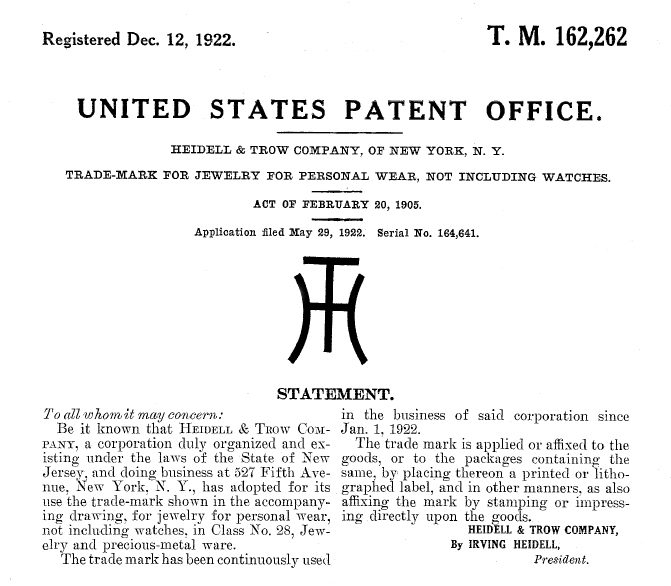


The maker's mark for Krementz & Co. has been described as a "moustache" and, my favorite, an "upside down two-handle umbrella." In fact, the mark is the profile of a single-piece collar button George Krementz invented in the 1880s. The maker's mark is usually preceded by a precious metal mark (here "14K").